
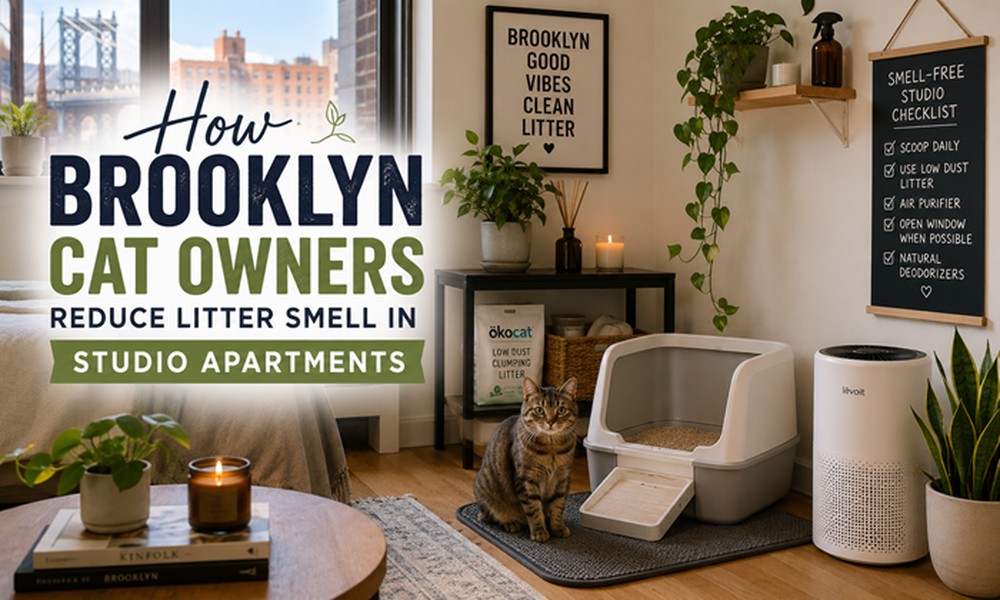
How Brooklyn Cat Owners Tackle Litter Smell in Tiny Studio Apartments
Living with a cat in a Brooklyn studio means you’re sharing roughly 400 square feet with someone who uses an open toilet in the corner of your living room. The litter smell in small apartments is a real problem – and if you’ve ever had a guest politely say “oh, you have a cat?” the second they walked in, you know exactly what that means.
The good news? You don’t have to choose between your cat and a fresh-smelling home. Brooklyn cat owners have gotten creative, and a few smart habits can make a massive difference.
Why Litter Box Odor Hits Harder in Small Spaces
In a house, odors dissipate. In a 500-square-foot studio, they marinate.
Poor ventilation, limited placement options, and proximity to your living and sleeping areas all amplify the problem. Understanding why it smells so bad helps you fix it at the source rather than just masking it.
The Science Behind the Smell
Cat urine contains urea, which bacteria break down into ammonia. That sharp, eye-watering smell? That’s ammonia building up. Solid waste adds hydrogen sulfide to the mix. The longer waste sits, the worse both get.
Top Strategies That Actually Work
1. Scoop Every Single Day (Non-Negotiable)
This sounds obvious, but it’s the single most effective thing you can do. Many cat owners scoop every other day – that’s one day too many in a small space. Daily scooping removes odor at the source before it can spread.
Set a reminder on your phone if you need to. Brooklyn-based cat rescuer Dina K., who fosters up to three cats at a time in her Bushwick one-bedroom, says daily scooping dropped her odor complaints from visiting friends almost completely.
2. Choose the Right Litter
Not all litter is equal. Here’s a quick comparison:
| Litter Type | Odor Control | Dust Level | Cost |
| Clumping clay | Good | High | Low |
| Crystal/silica gel | Excellent | None | Medium-High |
| Pine pellets | Very good | Low | Low-Medium |
| Paper-based | Fair | Low | Medium |
| Charcoal-infused | Excellent | Medium | Medium |
Silica gel crystal litters are particularly effective in studios because they absorb moisture and trap odors rather than just masking them. Many Brooklyn cat owners swear by Dr. Elsey’s Ultra or Fresh Step Crystals.
3. Ventilate the Box Area
A covered litter box seems like the obvious solution, but it can actually trap odors and make your cat uncomfortable. Instead, focus on airflow:
- Place the box near a window you can crack open
- Use a small USB fan directed away from the box to circulate air
- Consider a litter box with a built-in filter
4. Add an Air Purifier Nearby
A HEPA air purifier with an activated carbon filter placed within a few feet of the litter area makes a dramatic difference. The carbon layer specifically targets volatile organic compounds – the class of molecules responsible for that ammonia smell.
Levoit and Winix make reliable mid-range options under $100 that Brooklyn renters frequently recommend in local Facebook pet groups.
5. Use Baking Soda Strategically
Sprinkle a thin layer of baking soda at the bottom of the box before adding litter. It neutralizes odors without any fragrance that might put your cat off. Avoid heavy perfumed deodorizers – cats have sensitive noses and may stop using the box entirely.
Pro Tips from Experienced Cat Owners
- Use an enzyme cleaner (like Nature’s Miracle) for any accidents outside the box – regular cleaners don’t break down the uric acid crystals that cause lingering smell
- Wash the box itself with soap and warm water every 2-3 weeks, not just when it looks dirty
- Replace the litter box annually – plastic absorbs odors permanently over time
- Consider a second box even in small spaces; veterinarians recommend one box per cat plus one extra
Common Mistakes to Avoid
Covering everything in plug-in air fresheners is the number one mistake. They layer a floral scent over ammonia, which creates a strange hybrid smell that’s arguably worse. Guests will still know – they’ll just also smell lavender.
Skipping the box cleaning and only adding fresh litter on top is another trap. Old litter at the bottom is already saturated; new litter can’t save it.
Conclusion
Keeping a studio apartment smelling fresh with a cat is absolutely doable – it just requires a system. Daily scooping, quality litter, smart placement, and a carbon air purifier cover about 90% of the battle. The other 10% is consistency.
Start with the scooping habit and a litter upgrade. You’ll notice results within a week.