
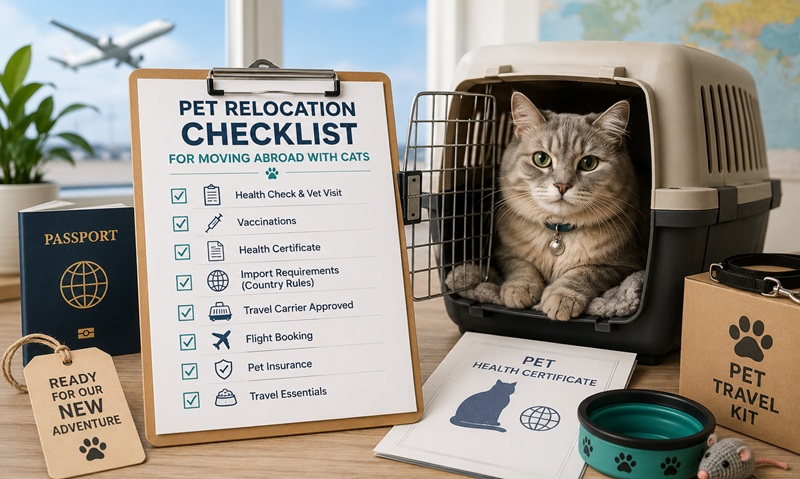
Moving to another country is stressful enough on its own. Add a cat into the mix, and suddenly you’re navigating microchips, health certificates, quarantine rules, and airline cargo policies — all while packing boxes and managing a visa. If you’re planning international pet relocation with cats, this checklist will walk you through exactly what to do, and when.
Why International Cat Relocation Is Different From Moving With Dogs
Cats are famously sensitive to change. Unlike dogs, who often adapt to travel with some coaxing, cats can shut down, stop eating, or become dangerously stressed under poorly managed moves. That emotional reality, combined with the bureaucratic reality of crossing borders with animals, makes a solid checklist non-negotiable.
The Full Pet Relocation Checklist for Cats Moving Abroad
6–12 Months Before Moving
- Research destination country requirements — Some countries (like Australia, New Zealand, and Japan) have strict quarantine periods of 10 days to 6 months. Others, like most EU nations, require only microchipping and a valid rabies titer test.
- Microchip your cat — Most countries require ISO 11784/11785-compliant 15-digit microchips. If your cat already has one, confirm it’s the right standard.
- Start the rabies vaccination timeline — The rabies antibody titer test (RNATT) must be done at least 30 days after vaccination and often 3 months before travel. That’s why 6–12 months lead time matters.
- Choose a USDA- or government-accredited vet — Only certain vets can sign international health certificates. Don’t wait until the last minute to find one.
3–6 Months Before Moving
- Book a pet-approved airline and check their live animal policies — cargo vs. cabin rules vary wildly.
- Order your cat’s travel crate and begin crate training immediately.
- If moving to a country with quarantine, book the approved facility in advance — spots fill up.
- Begin collecting vaccination records in the format the destination country requires.
1–3 Months Before Moving
- Get the official veterinary health certificate (timing is critical — most expire within 7–10 days of travel).
- Apply for any import permits the destination country requires.
- Confirm all endorsements (e.g., USDA APHIS endorsement for U.S. pets) — allow 2–3 weeks.
1–2 Weeks Before Moving
- Final vet check and health certificate signing.
- Confirm airline booking details for your pet.
- Pack a cat travel kit: familiar blanket, pheromone spray (Feliway is widely trusted), food, water bowl, and medical records.
Comparison: Country Requirements at a Glance
| Country | Quarantine | Rabies Titer Test | Microchip Required |
|---|---|---|---|
| UK | None (if all conditions met) | Yes | Yes |
| Australia | 10 days minimum | Yes | Yes |
| UAE | None | Yes | Yes |
| Germany | None (EU rules apply) | No (if vaccinated) | Yes |
| Japan | Up to 180 days | Yes | Yes |
Expert Insight: Hire a Pet Relocation Specialist
If your destination requires a titer test, multiple government endorsements, and an import permit, consider hiring a pet relocation service like PetRelocation.com or IPATA-certified agents. One missed stamp on a health certificate can mean your cat is turned away at the border or sent to quarantine at your expense. The cost of a specialist ($500–$2,000 USD) often saves you from costly mistakes.
Common Mistakes to Avoid
- Skipping the titer test timeline: Many cat owners don’t realize the blood test must be done at a government-approved lab, and results take 2–4 weeks.
- Booking an airline without checking pet policies: Some routes don’t allow live animals in cargo during summer due to heat.
- Using the wrong crate size: Airlines have strict IATA-compliant crate requirements. Measure your cat at full stretch.
- Waiting too long on the health certificate: Most certificates are valid for only 7–10 days from the signing date.
Pro Tips for a Calmer Move
- Use calming aids wisely: Feliway spray on the carrier, not directly on your cat.
- Feed lightly before travel — a 4-hour fast reduces nausea without causing distress.
- Familiar smells help: Put an unwashed T-shirt in the carrier.
- Book a direct flight whenever possible. Layovers in cargo are higher-risk.
FAQs: Moving Abroad With Cats
Q: Can my cat fly in the cabin internationally?
Most long-haul international flights require cats to travel as checked baggage or cargo. A few airlines allow small cats in-cabin on shorter routes. Always confirm directly with the airline.
Q: How long does the full pet import process take?
For most destinations: 3–6 months minimum. For strict countries like Australia or Japan: 6–12 months.
Q: What happens if my cat fails the titer test?
Your cat will need to be re-vaccinated and retested. Add another 3 months to your timeline.
Q: Do cats need a passport?
The EU Pet Passport is a recognized document for travel between EU member states. For non-EU countries, you’ll need a country-specific health certificate instead.
Q: Is sedation safe for cats during flights?
Most vets and airlines advise against sedating cats for air travel, as sedatives affect respiratory function at altitude.
Conclusion
Relocating abroad with your cat is completely doable — but it demands planning months in advance. Start with your destination’s import requirements, lock in the microchip and titer test early, find an accredited vet, and give yourself more time than you think you need. The checklist above isn’t just a to-do list; it’s a timeline. Follow it in order, and your cat’s international move can go smoothly.
Start your research today at the official government portal of your destination country, and always cross-check with your vet.
You may also like
-
High-Value Rewards: How to Choose the Best Dog Treats for Training Success
-
Low-Calorie & Healthy: Favorite Dog Training Treat Brands for Long Training Sessions
-
New Weight Gainer for Dogs Designed for Post-Illness Recovery
-
Unlocking your pup’s potential: fun and engaging puzzle toys for dogs
-
Why are fleas bad for a dog’s health?